Internet & WAN strategy
Evaluate dedicated internet, broadband, private networking, SD-WAN, and other connectivity approaches against application requirements, locations, commercial terms, and the organization’s operating model.

Make infrastructure decisions with a clear view of your organization, locations, users, applications, and long-term goals.
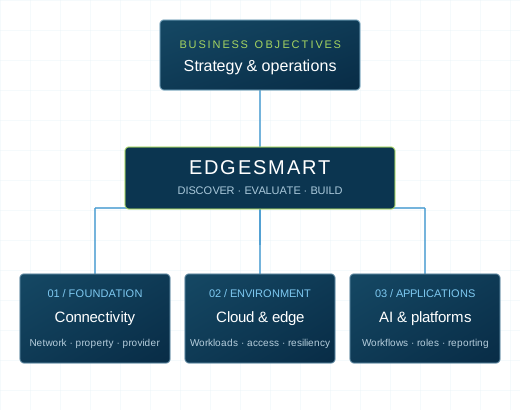
Align the network, service agreements, user experience, and implementation plan across corporate offices, distributed sites, campuses, and property portfolios.
Select a capability to explore the approach and potential deliverables.
Define building connections, pathways, distribution locations, unit requirements, and capacity assumptions. Evaluate passive optical and other access approaches where appropriate, with engineering validation for the final design.
Site requirements brief; pathway questions; access architecture comparison.
Map indoor and outdoor coverage needs across residences, cottages, offices, amenities, and common areas. Consider resident, guest, staff, and operational access separately. Coverage claims should follow a validated design and on-site testing.
Coverage inventory; user access requirements; survey and acceptance criteria.
Compare the relationship between physical infrastructure and the service agreement. Examine bulk commitments, provider responsibilities, contract terms, and the options available when the service agreement expires.
Service-model comparison; contract questions; infrastructure ownership considerations.
Evaluate application demand, upload needs, site-to-site connectivity, critical workflows, service commitments, and redundant paths. Translate these needs into requirements that providers can address consistently.
Bandwidth assumptions; resiliency requirements; provider scope checklist.
Review offers against one requirements baseline. Compare construction assumptions, recurring charges, installation scope, service levels, support responsibilities, and renewal provisions. Identify exclusions that may become owner responsibilities.
Comparison matrix; clarification questions; decision-ready options brief.
Plan communications, access to buildings and units, sequencing, cutover windows, escalation, and completion criteria. Coordinate the agreed planning work with property teams, providers, and implementation resources.
Transition plan; responsibility matrix; milestone and acceptance checklist.
Evaluate dedicated internet, broadband, private networking, SD-WAN, and other connectivity approaches against application requirements, locations, commercial terms, and the organization’s operating model.
Map headquarters, branches, facilities, and remote users. Review cloud access, routing dependencies, identity requirements, and how access is administered across the environment.
Define critical services and redundancy requirements. Examine carrier diversity, physical route assumptions, failover behavior, and the acceptance testing needed to validate the intended design.
Compare service commitments, support boundaries, escalation, installation dependencies, contract terms, and renewal options. Establish who owns the network decisions and ongoing service coordination.
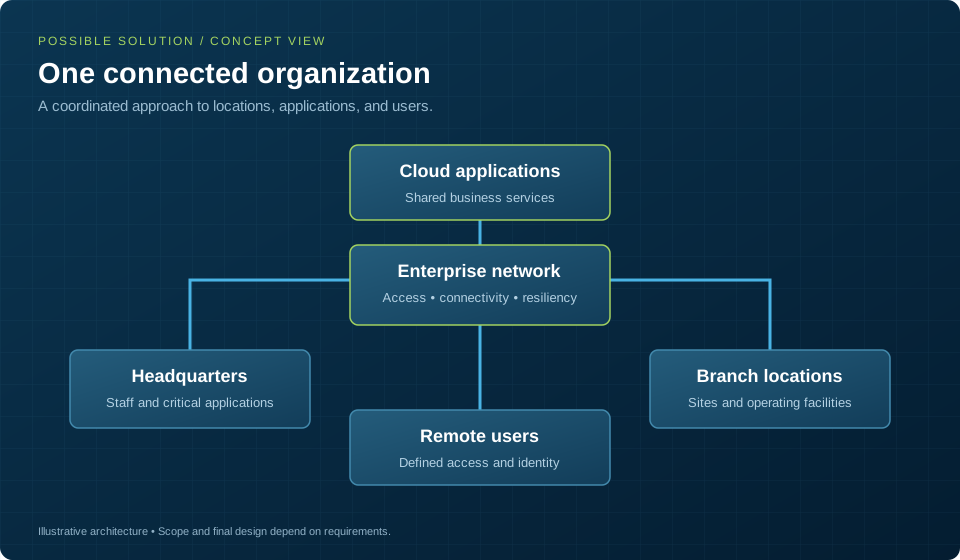
Illustrative scenarios to explain the approach; these are not customer case studies or promised results.
Document property characteristics, current agreements, user needs, and known service gaps.
Compare network approaches, provider proposals, commercial terms, and operational responsibilities.
Prepare a requirements brief, decision framework, and phased implementation roadmap.
Support agreed planning activities with the owner, providers, and implementation teams.
Scope is agreed before the engagement. The right deliverable should help your team make a decision, coordinate responsibilities, or validate the next step.
Start with a conversation about what you need to solve.